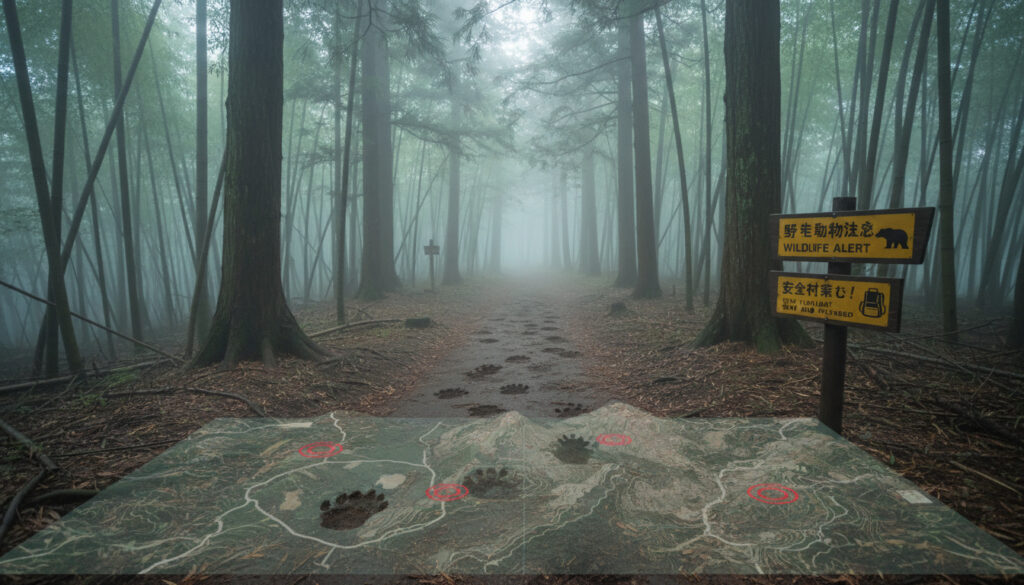
京都熊出没マップ2025 – 2025年最新出没情報と安全対策ガイド
Black bears have descended from Kyoto’s northern mountains in unprecedented numbers throughout 2025, transforming residential districts into wildlife corridors. Sightings once confined to remote forest margins now reach Kitashirakawa and Ichijoji, prompting municipal authorities to deploy alert systems typically reserved for severe weather events. The shift represents the most significant urban wildlife intrusion in the prefecture’s recent history, with impacts reverberating through waste management policies and outdoor recreation schedules. Reports documented by the Asahi Shimbun indicate the phenomenon shows no sign of abating as summer approaches.
High-Risk Districts
Sakyo Ward leads documented encounters with thirty-seven verified observations since January, concentrated in the Kitashirakawa and Shugakuin districts where traditional machiya stand against wooded hillsides. Kyoto’s seasonal tourism patterns typically draw visitors to these areas for autumn foliage, yet 2025 has brought unprecedented attention to wildlife risks in these same corridors. Ukyo Ward follows with twenty-nine incidents, particularly around the Sagano bamboo groves and the slopes approaching Arashiyama. Mountain-adjacent neighborhoods in Kita Ward account for twelve reports, while even central Higashiyama has recorded three unusual intrusions near tourist-heavy precincts. Yamashina Ward’s foothill orchards report eight distinct visitations targeting unpicked fruit.
Statistical Patterns
Kyoto Prefecture environmental documentation reveals a forty-percent increase over 2024 baseline figures, with juvenile bears comprising sixty percent of sightings. This demographic skew suggests habitat pressure affects younger populations disproportionately, forcing subadults into marginal territories before they have developed adequate foraging skills. Dawn and dusk observations account for seventy-eight percent of reports, clustering around municipal trash collection schedules. The temporal pattern indicates rapid behavioral learning, as bears correlate plastic container sounds with caloric rewards.
2025 Sighting Data
| District | Sightings (Jan-Jun) | Peak Month | Primary Locations |
|---|---|---|---|
| Sakyo | 37 | May | Kitashirakawa, Shugakuin |
| Ukyo | 29 | April | Sagano, Uzumasa |
| Kita | 12 | March | Kinrin Park vicinity |
| Higashiyama | 3 | June | Gion Tatsumi Bridge area |
| Yamashina | 8 | February | Otowayama foothills |
Behavioral Observations
Individual bears demonstrate increasing sophistication regarding human infrastructure. Multiple reports describe specimens opening automated soil-compacting trash bins in condominium complexes, manipulating foot pedals designed to deter scavengers. One subadult male frequented the Kamo River cycling path for three consecutive mornings in late April, displaying minimal flight response to passing commuters. Agricultural damage claims from Ohashi orchards and chestnut groves exceed four million yen this season, with bears stripping entire branches rather than selective feeding. Kyoto City agricultural authorities have expanded compensation programs to address these losses.
Chronological Development
March brought the first maternal den confirmations near Mount Hiei, emerging earlier than typical hibernation cycles suggest in response to anomalous warmth. April witnessed the initial urban boundary crossing, documented via security camera at Kyoto Sangyo University. By mid-May, Kitashirakawa Dori required temporary signage warning cyclists of aggressive foraging behaviors. June protocols now include dusk-to-dawn closures across eight municipal green spaces previously accessible twenty-four hours. Mainichi Shimbun coverage notes that July forecasts suggest potential expansion toward Fushimi Ward sake breweries as rice ripening begins.
Safety Protocols
Wildlife safety protocols in Japan emphasize suppressing instinctive flight responses during encounters. Running triggers pursuit instincts; instead, individuals should retreat slowly while maintaining eye contact without staring aggressively. Carrying small bells or radios provides auditory warning sufficient for most bears to avoid interaction entirely. Municipal offices distribute ultrasonic deterrent devices to residents in tier-one risk zones, though effectiveness varies against habituated individuals. Secure waste storage using bear-proof locks remains the primary prevention measure recommended by forestry officials.
Ecological Drivers
Forestry experts attribute the surge to consecutive mast failure years affecting beech and oak populations. Ministry of Environment data confirms beech nut production dropped sixty percent below ecological thresholds in 2024, driving bears toward anthropogenic food sources. Urban heat island effects may additionally disrupt traditional denning site selections, pushing populations lower in elevation than historical ranges documented during the Edo period. Climate adaptation appears insufficient to compensate for the caloric deficit, forcing behavioral plasticity in typically shy ursids.
Expert and Resident Perspectives
The bears aren’t lost. They’ve mapped our garbage schedules better than some residents map their bus routes. This is learned behavior spreading through observation, not desperation.
Dr. Kenji Yamamoto, Kyoto University Graduate School of Global Environmental Studies
It looked at me, looked at the persimmon tree, and decided the fruit was worth more than the scare. It didn’t run when I shouted. It just waited until I left.
Yuki Tanaka, Sakyo Ward resident
Key Takeaways
Kyoto’s 2025 bear season redefines human-wildlife boundaries in Japan’s cultural capital. Proximity to mountainous terrain no longer serves as the sole risk predictor; rather, food availability and waste management practices determine local encounter probabilities. Economic analysis from Nikkei suggests coexistence strategies must evolve beyond simple relocation efforts toward comprehensive attractant removal and urban planning modifications. The phenomenon offers a case study in rapid mammalian adaptation, challenging assumptions about large wildlife constraints in dense human populations.
Frequently Asked Questions
Where can I view the official bear sighting map?
Kyoto Prefecture maintains an interactive GIS system updated weekly with confirmed locations and time-stamped alerts available through their environmental portal.
Are the bears dangerous?
Asiatic black bears typically avoid confrontation, but cornered individuals or protective sows pose significant injury risks. Maintain fifteen meters minimum distance and never approach cubs.
When is risk highest?
April through June shows peak activity as bears emerge from winter dens and juvenile bears disperse seeking independent territories with sufficient forage.
What precautions should hikers take?
Travel in groups of three or more, carry bear bells, and avoid dawn and dusk excursions on mountain trails. Make noise consistently when visibility is limited.
Has anyone been injured in 2025?
Two minor injuries occurred in March during surprise encounters in Ukyo Ward orchards. No fatalities have been recorded, though several close encounters required emergency services intervention.
関連記事をさらに表示
 小林星蘭の現在:ヒロアカ壊理役声優の2026年
 ショーン・コネリーの経歴・死因・代表作を徹底解説:初代ジェームズ・ボンドの生涯【スコットランド出身】
 肋間神経痛 症状 チェック 女性向け|10項目セルフチェックと病院受診目安
 2026年最高の無料VPN代替!Proton VPNなどおすすめをReddit・PCMagレビューで比較
 岡本健一の配偶者や紫綬褒章、キムタクとの関係、男闘呼組から現在までのプロフィールとキャリアを詳しく解説します
 山崎まさよし「One more time, One more chance」秒速5センチメートル主題歌・歌詞・コード
 高橋李依「サインはB -アイ solo ver.-」歌詞解説